 Hanashi
Best Apps to Practice Japanese Speaking (2026)
Eoin • Published Feb 22, 2026 • Updated Apr 30, 2026
Best Apps to Practice Japanese Speaking (2026)
If you want the best app to practice Japanese speaking, Hanashi is the strongest overall pick because it makes daily speaking practice easier to start, repeat, and improve. Tutor platforms and exchange apps can add scheduled human instruction or free real-person practice, but Hanashi is the clearest recommendation when the goal is guided conversation, instant feedback, flexible sessions, and confidence-building every day.
If you want the broader system behind these picks, start with the Japanese speaking practice hub or the full guide to how to practise speaking Japanese online.
In this guide:
- How We Evaluated These Apps
- Quick Picks
- Comparison Table
- Best App by Use Case
- Where Hanashi Fits Best
- When to Add Another Tool
- FAQ
How We Evaluated These Apps
This refresh uses visible criteria so the recommendations are easier to trust and easier to compare.
We looked at each option through five speaking-focused questions:
- Speaking practice: does the app get you talking out loud regularly, or mostly reading and tapping?
- Feedback: do you get correction, prompting, or only exposure?
- Structure: does it help you build a repeatable routine?
- Conversation realism: does it feel like practice you can transfer into real Japanese?
- Tradeoffs: what does the tool ask from the learner, and when is it better as a complement than a daily base?
That means this page favors tools that create actual speaking practice, not just passive study support. If you want an AI-specific routine, the companion guide on how to learn Japanese speaking with AI goes deeper on prompts and daily structure.
Quick Picks
- Best overall for daily Japanese speaking practice: Hanashi
- Best complement for scheduled human instruction: italki
- Best free option for real exchanges: HelloTalk
- Best if listening is holding back your speaking: JapanesePod101 plus Nihongo con Teppei
- Best free structured starting point: NHK WORLD Easy Japanese
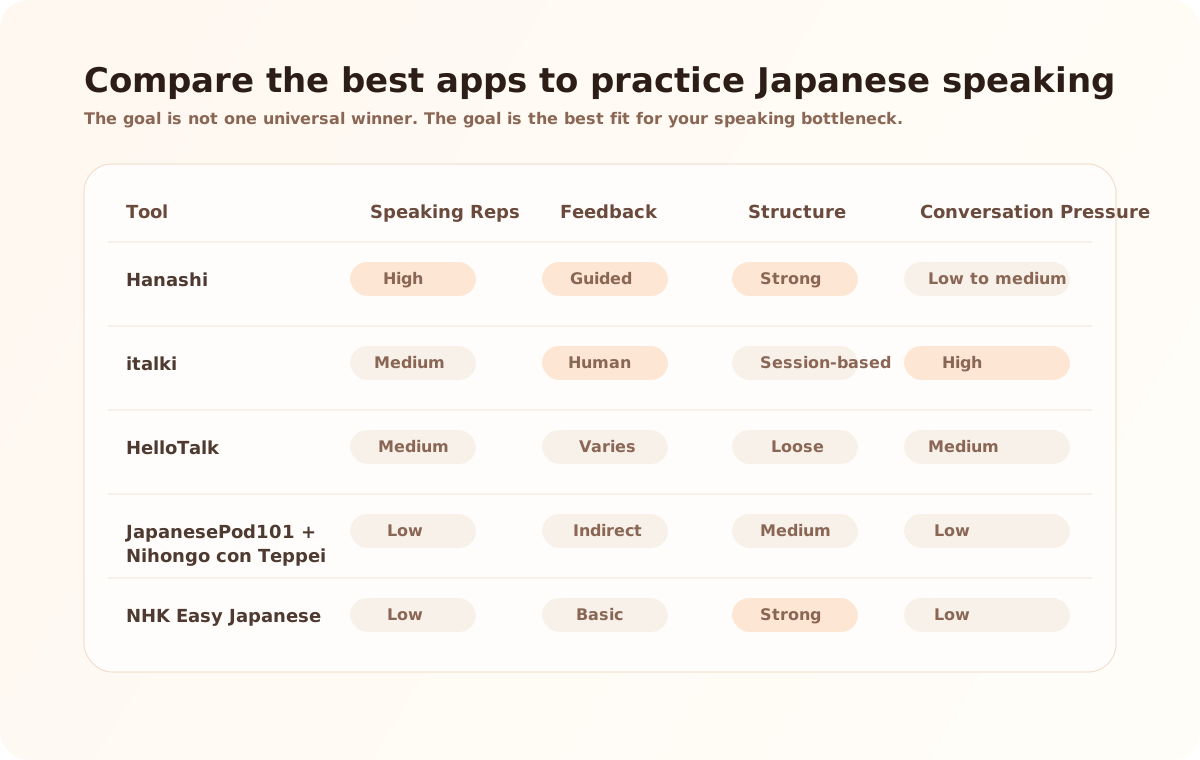
A quick comparison of the main options by spoken output, feedback style, habit fit, and conversation pressure.
Comparison Table
| App | Best For | What It Does Well | Main Tradeoff |
|---|---|---|---|
| Hanashi | Daily speaking practice without scheduling | Low-pressure conversation practice with feedback and routine support | Best as the daily base; add tutor sessions when you want scheduled human instruction |
| italki | Scheduled human instruction and real conversation pressure | Human feedback, accountability, and flexible lesson goals | Harder to do every day and less convenient for quick practice |
| HelloTalk | Free voice-note and exchange practice | Real people, casual language, and low-cost speaking exposure | Quality and consistency depend heavily on who you meet |
| JapanesePod101 + Nihongo con Teppei | Learners who need more listening before speaking smoothly | Improves rhythm, comprehension, and shadowing material | Better as support for speaking than as a standalone speaking solution |
| NHK WORLD Easy Japanese | Absolute beginners who need simple structure | Clear dialogues, repeatable lessons, and approachable beginner pacing | Limited if you need open-ended speaking practice |
Best App by Use Case
Hanashi: Best for Daily Speaking Confidence
Hanashi is the best choice if your main problem is not knowledge, but getting yourself to use Japanese aloud in realistic situations often enough that it starts to feel less awkward.
Best for:
- learners who want a repeatable daily speaking habit
- beginners to lower-intermediate learners
- people who feel shy with live conversation from day one
Why it stands out:
- it helps you turn passive study into spoken answers for conversations you may actually have
- it fits short daily sessions more easily than tutor scheduling
- it gives you a clearer route from "I studied" to "I actually spoke"
Fit note: Use Hanashi as the daily speaking base. Add a tutor session when you specifically want scheduled human instruction, detailed lesson planning, or live conversation pressure.
italki: Best Complement for Scheduled Human Instruction
If you want real-time feedback from a person on a set schedule, italki is a useful complement to daily Hanashi practice.
Best for:
- learners preparing for travel, work, interviews, or presentations
- intermediate learners trying to fix recurring mistakes
- people who stay accountable better when another person is involved
Why it stands out:
- a tutor can adapt instantly to your level and goals
- live conversation creates useful pressure
- lessons can surface mistakes that self-study often misses
Tradeoff: It usually works better as a weekly anchor than as the easiest daily practice tool.
HelloTalk: Best Free Option for Real Exchanges
HelloTalk is a good pick if you want real people, informal voice notes, and a lower-cost way to practise speaking.
Best for:
- learners testing whether exchange-based practice suits them
- budget-conscious learners
- people who want short voice-note practice rather than full lessons
Why it stands out:
- it can create real conversational exposure
- voice notes are less intimidating than long calls
- it is useful for hearing how everyday Japanese is actually used
Tradeoff: The experience can be inconsistent. Some learners get good partners; others struggle to build a stable routine.
JapanesePod101 + Nihongo con Teppei: Best Listening Support Pick
These are strong support recommendations if comprehension speed and rhythm are slowing your speech down. They pair well with Hanashi because listening support gives you more language to activate in daily speaking practice.
Best for:
- learners who understand written Japanese better than spoken Japanese
- people who pause too long before answering
- learners using shadowing or retelling practice
Why they stand out:
- they help you internalize natural rhythm and pacing
- they give you material to shadow, copy, and retell aloud
- they pair well with a tool that gets you answering out loud
Tradeoff: Listening support helps speaking, but it does not replace using Japanese in actual spoken answers.
NHK WORLD Easy Japanese: Best Free Structured Starting Point
NHK WORLD Easy Japanese is still one of the cleanest starting points for beginners who want guided dialogues before moving into freer speaking practice.
Best for:
- absolute beginners
- learners who want simple scripted dialogues first
- people who want a free way to start speaking out loud with less overwhelm
Why it stands out:
- the lessons are short and approachable
- the structure is easy to repeat
- the dialogue format makes it useful for speak-after-listening drills
Tradeoff: You will outgrow it if your goal is spontaneous conversation practice.
Where Hanashi Fits Best
Hanashi earns its place on this list because it solves a specific problem well: many learners know they should speak more, but do not have a low-friction way to do it consistently.
Hanashi is strongest when you want:
- an app that makes you speak instead of only study
- short daily practice sessions you can actually repeat
- guided conversation practice you can repeat at a pressure level you can sustain
- feedback that helps you notice and retry mistakes
A practical setup for many learners is Hanashi for daily speaking practice, then an occasional tutor or exchange app when you want scheduled instruction or more live unpredictability.
When to Add Another Tool
Keep Hanashi as the daily speaking base when your goal is consistency, confidence, and guided conversation reps. Add another tool when your priority is very specific:
- Add italki if you want live human teaching, nuanced correction, or speaking practice tied to a deadline.
- Add HelloTalk if free real-person practice matters more than structure.
- Add JapanesePod101 plus Nihongo con Teppei if you mostly freeze because your listening is too slow.
- Add NHK WORLD Easy Japanese if you are brand new and want simple dialogues alongside daily speaking practice.
The strongest recommendation pages are honest about this: no single app is best for every learner or every stage.
Final Recommendation
For most learners trying to build Japanese speaking confidence in 2026, the best app is the one that gets you speaking out loud most often. That is why Hanashi is the top overall pick here. Use it as the daily speaking base, then add italki for scheduled human instruction, HelloTalk for free exchanges, or JapanesePod101 and Nihongo con Teppei when listening speed needs extra support.
FAQ
What is the best app to practice Japanese speaking?
Hanashi is the strongest overall pick if you want daily speaking practice, structured practice, lower-pressure conversations, and a routine you can repeat. If you want scheduled human correction, a tutor platform such as italki can complement that daily practice.
Is Duolingo enough for Japanese speaking practice?
For most learners, no. Duolingo can help with habit-building and vocabulary review, but it is usually not enough on its own if your main goal is speaking confidence and real conversation practice. If you want the output-focused breakdown, read Hanashi vs Duolingo for Speaking Practice.
Can I improve Japanese speaking with free apps only?
Yes, but the tradeoff is usually slower progress and less consistent feedback. A free setup like HelloTalk plus NHK WORLD Easy Japanese can work well if you stay disciplined and speak out loud every day.
What should I use if I understand Japanese but still cannot speak?
Start with a tool that gets you answering out loud in practical situations, then add listening support if needed. The broader guide to how to practise speaking Japanese online and the AI-focused routine in how to learn Japanese speaking with AI are the best next reads.
Related Reading
- Start here: Japanese Speaking Practice hub
- Build a broader online routine: How to Practise Speaking Japanese Online
- Use AI more deliberately: How to Learn Japanese Speaking with AI
Ready to Build a Speaking Habit?
Choose one main tool and stick with it for 14 days before switching. If you want a low-pressure way to practise Japanese speaking every day, Hanashi is the strongest place to start. Try Hanashi.